
Re-visiting Guria in Benaras, Uttar Pradesh, India: Making plans for a Scholarship Program for Girls
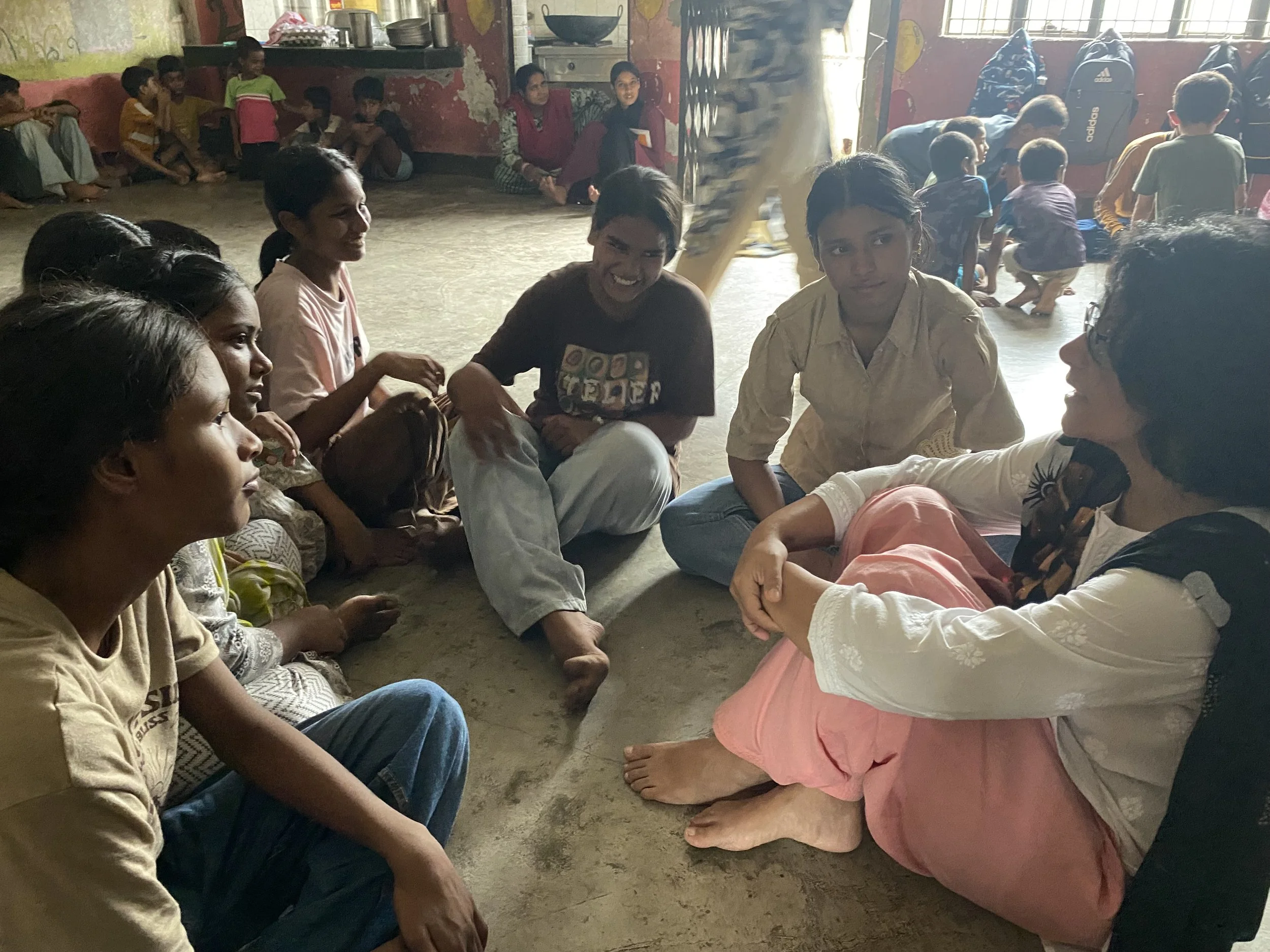
Older girls at Guria Non-Formal Education Center. They are looking towards the future and they are looking for a way to be independent income-earners, armed with credentials that take them out of the red-light district they have been born into and grown up in.
This was a summer for visiting projects in Benaras, Uttar Pradesh, India with an eye towards evaluation of existing programs and potential expansion of The Ahimsa Project with new programs/partnerships. We looked at organizations that worked for girls and women in violence prevention, education, skills training, income generation, and career development. We met with staff and students in hostels, schools, libraries, online English and in-person vocational educational classes. However, of all the organizations and projects we visited the only one that we went back to evaluate is also the one that Barakat is currently funding – Guria, India.
Guria works towards three goals:
- Ending second-generation child prostitution, i.e., the children of sex-workers do not in turn become prostitutes and pimps themselves.
- Ending child prostitution. This has been achieved, through Guria’s efforts, in the red-light district of Benaras, Uttar Pradesh (a city with a population of approximately 1.8 million).
- Preventing sex trafficking through daring raids, legal action, and awareness building.
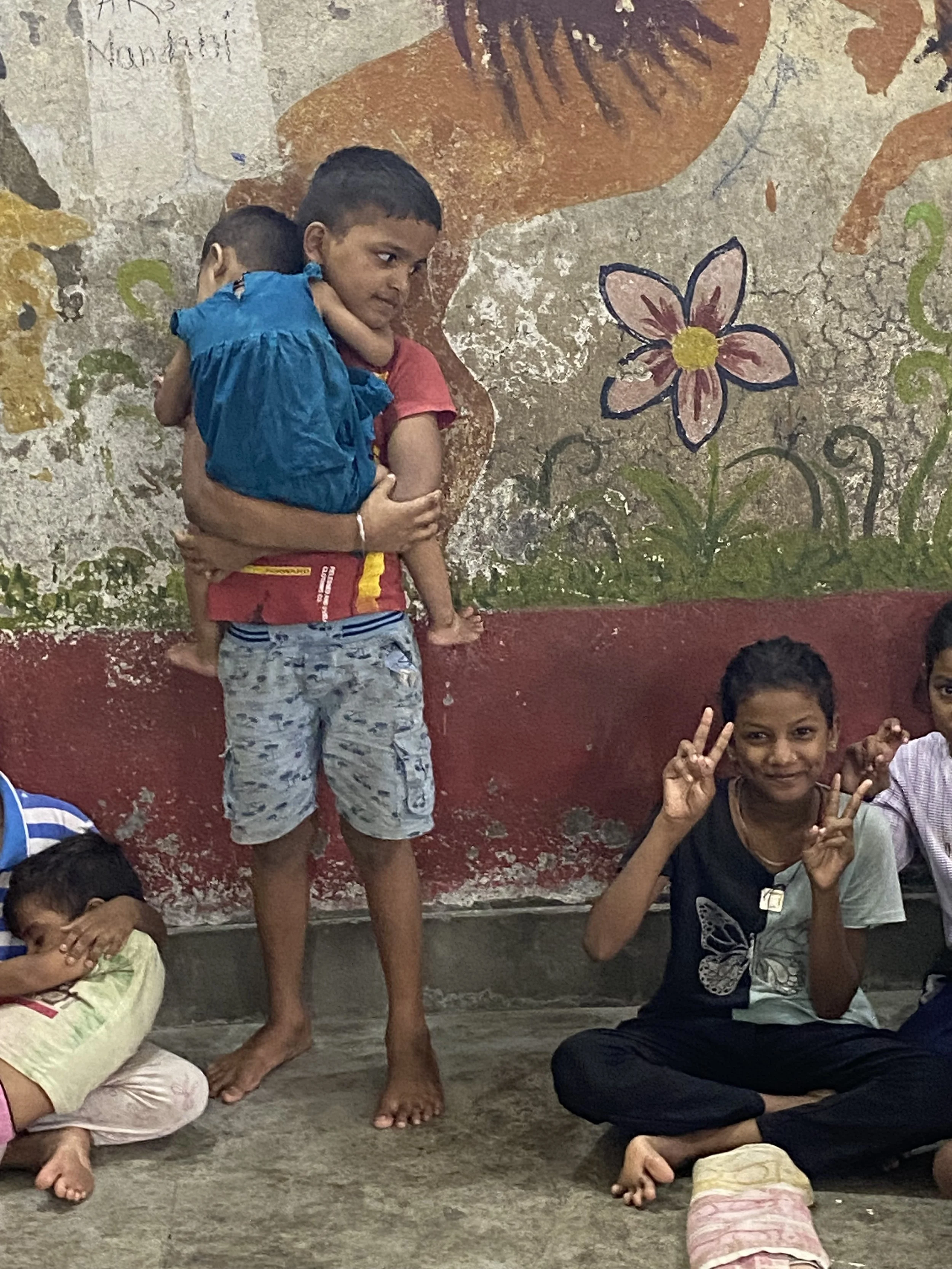
As is common all over India, older siblings will often be the baby-sitters and sometimes almost full-time caregivers. It is usual to see older children carrying young ones as they come to Guria’s non-formal education center.
While Guria has a multi-pronged strategy to meet their goals, the one that Barakat is supporting is directed towards the children of sex workers. In Shivdaspur, the red-light area of Benaras, Guria operates a Non-Formal Education (NFE) Center for the children. Approximately 120 children and young adults, from less than a year old to college students in their twenties, attend the Center. They walk down (or are carried by their siblings) from their homes after school everyday, over the weekends, and during school vacation to create art, sing songs, dance, eat a daily meal together, meditate and thereby reclaim the normalcy that every child should have in his/her life.
When we reached to the non-formal education center from Guria’s office we were greeted by the youngest group (up to 2nd grade) learning their numbers, alphabet, and nursery rhymes. They were led by one girl who sang out the prompt in a very loud voice which was then picked up by the other children, sitting around the room, in even louder voices. This was followed by a game of musical chairs which was played with such unbounded enthusiasm that words fail me in describing how dynamic and alive the atmosphere was.
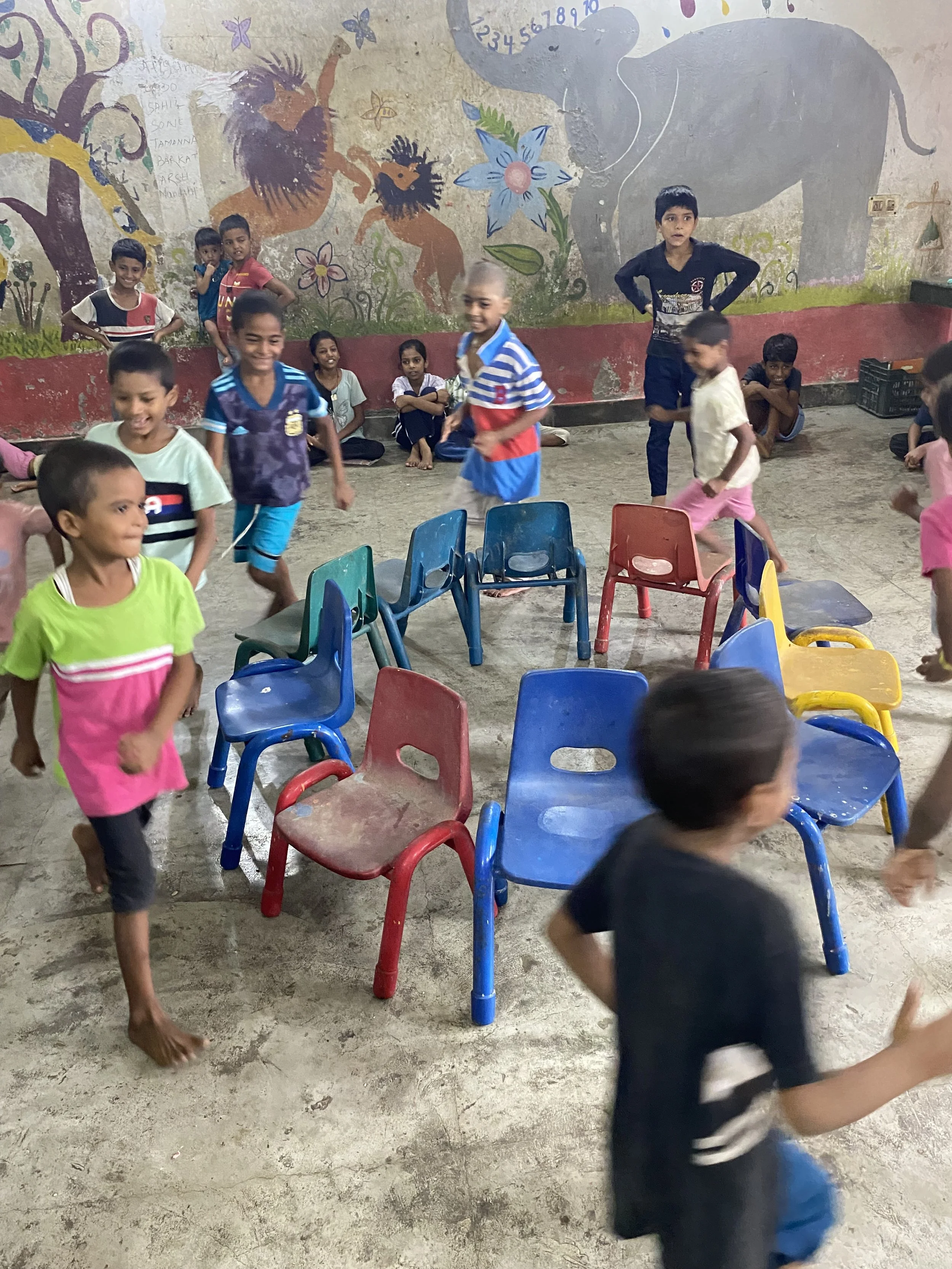
Joy should always be the prerogative of childhood. We saw it in the faces, laughter and dancing feet of the children at Guria.
Upstairs we saw the older girls learning the two most-popular-of-all vocational trades in Uttar Pradesh: tailoring and beautician. Bent over their work, creating beautiful henna designs and practicing their stitches, the girls looked up only to exchange a few words with us. They were being taught by their own seniors who had learnt the skills in the Center over the years. Some of the students had been attending since they were toddlers and are now in High School or doing their ‘graduation,’ i.e., Bachelors degree.
Almost all the school-going children are attending private schools (56 students are covered by Guria; the remaining are paying their own way) since the performance of government schools in Eastern UP is so dismal that the government itself is closing the schools. The state of education being provided by the UP government is depressing, to say the least. This in turn has led to a proliferation of private schools which have a widely varying fee structure, from the affordable to the exorbitant.
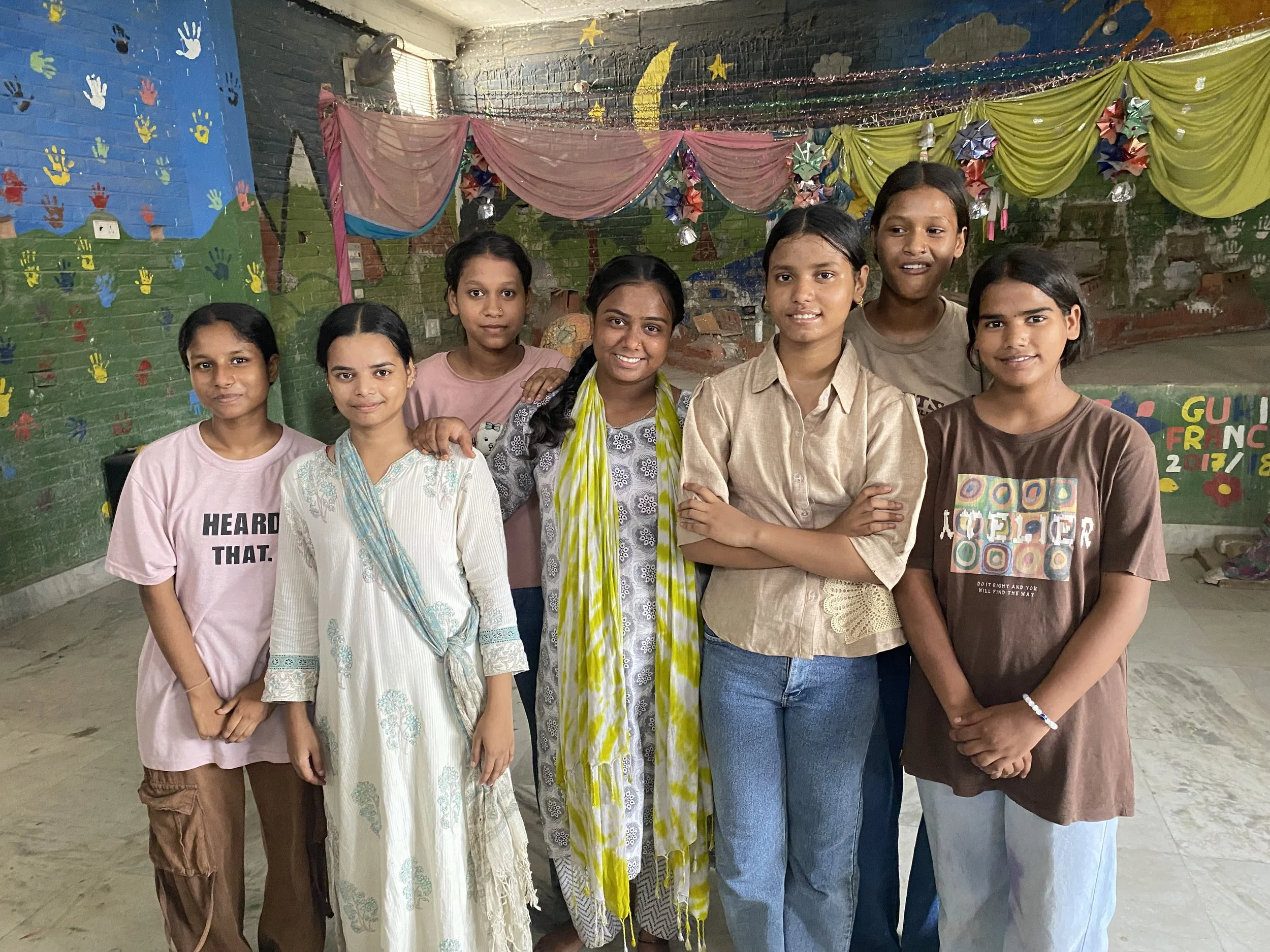
Barakat funding was used to fund the vocational education of 10 students last year. We will look towards expanding this initiative and funding scholarships for girls who want to pursue more certain career oriented education courses.
Finally, on the top floor of the non-formal education center we met the oldest girls who gave us a beautiful dance performance. Our time at the Center ended with the meditation session that all children attend every day. They begin with a lot of clapping and noise and end with a quiet that belies their everyday level of activity.
The Center is guided by the founder, Ajeet Singh’s, principles regarding art therapy as a way of creating beauty both within and outside. The children who come to this Center are aware of their origins; they learn – sooner rather than later – about their mother’s profession. They know they are looked down upon by all others in India’s deeply hierarchical society. They are not treated just as ‘children’ by society, but as ‘children of prostitutes.’
Once children of sex-workers come of age they are often met with closed doors. Older girls may try to sit for competitive examinations but if they are met with failure, even once, their mothers will encourage them to join the trade and earn money – easily and quickly. Often it is so that the mothers themselves are the primary movers (de facto pimps) in this situation because they are reaching an age where they may not be able to sell themselves for that much longer. They turn to their daughters then to become the primary source of income and if the girls are not able to bring in money by other means, the mothers encourage them to sit on the street front.
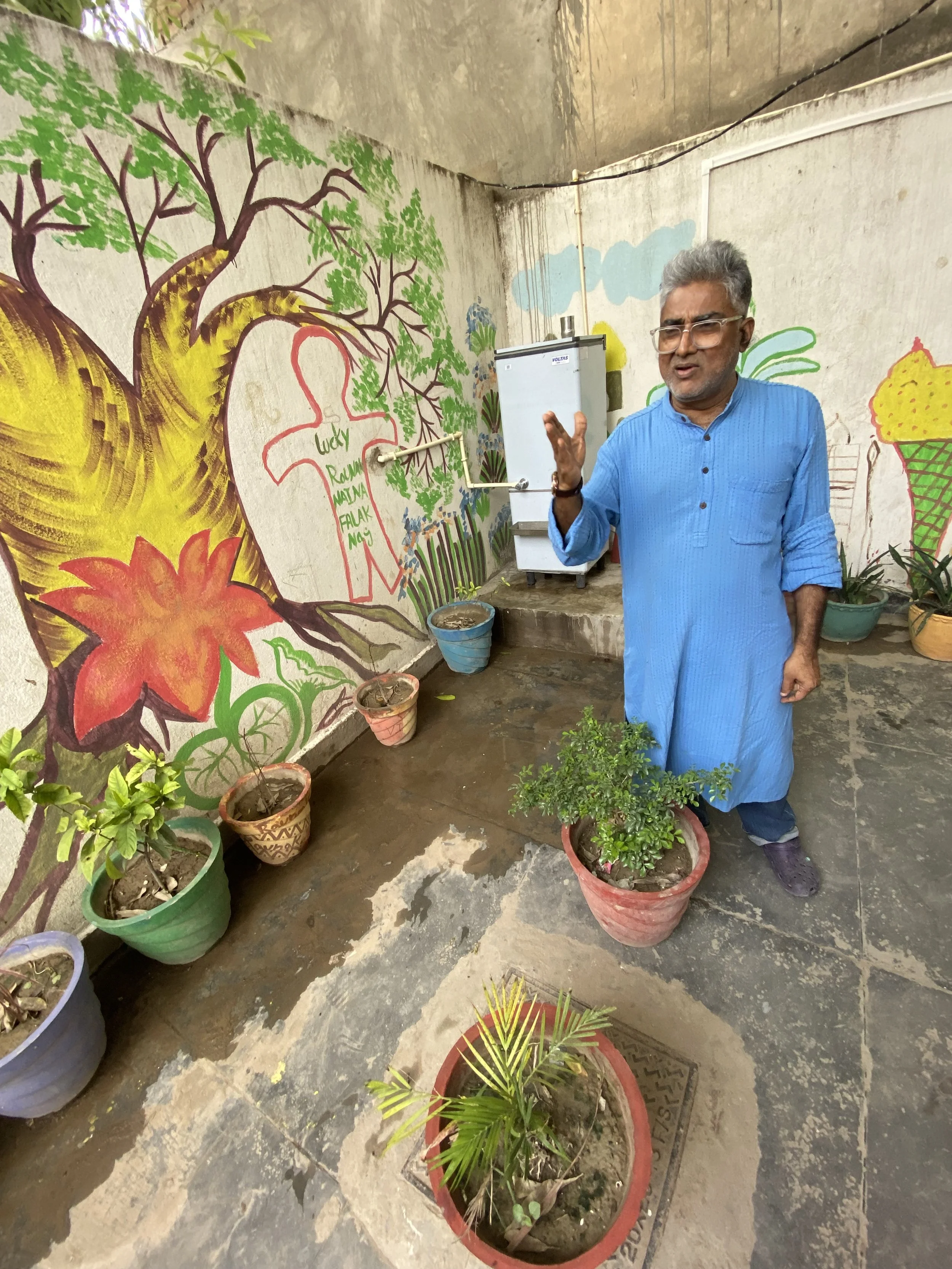
“Who can we turn away?” Ajeet Singh, the founder of Guria asks, when contemplating the overwhelming number of human trafficking cases they have taken on for legal redress.
For both the boys and girls from this community there is a real lack of role models who they may want to follow. They look around them and see pimps and prostitutes who are making money. They do not see the point of continuing to struggle, to aspire to something that takes them out of this morass. Many of them return to the profession that they see around them as the only alternative or at least the only one that is beckoning them with open arms!
It would be ideal if Barakat could set up a scholarship fund at Guria for older children so that they have options after High School and/or their Bachelors degree. If we could, in this way, support some of the children of sex workers, they would in turn act as role-models for others in their own community. We have started the conducting the needs assessment for this initiative and I look forward to keeping your informed as the Scholarship Program takes shape.
Indeed, children are just children, irrespective of where they are born. If we can do something to help them prosper so they break the cycle of poverty and sex work, that they are born into, we will be able to do a little bit to make a difference in their lives.
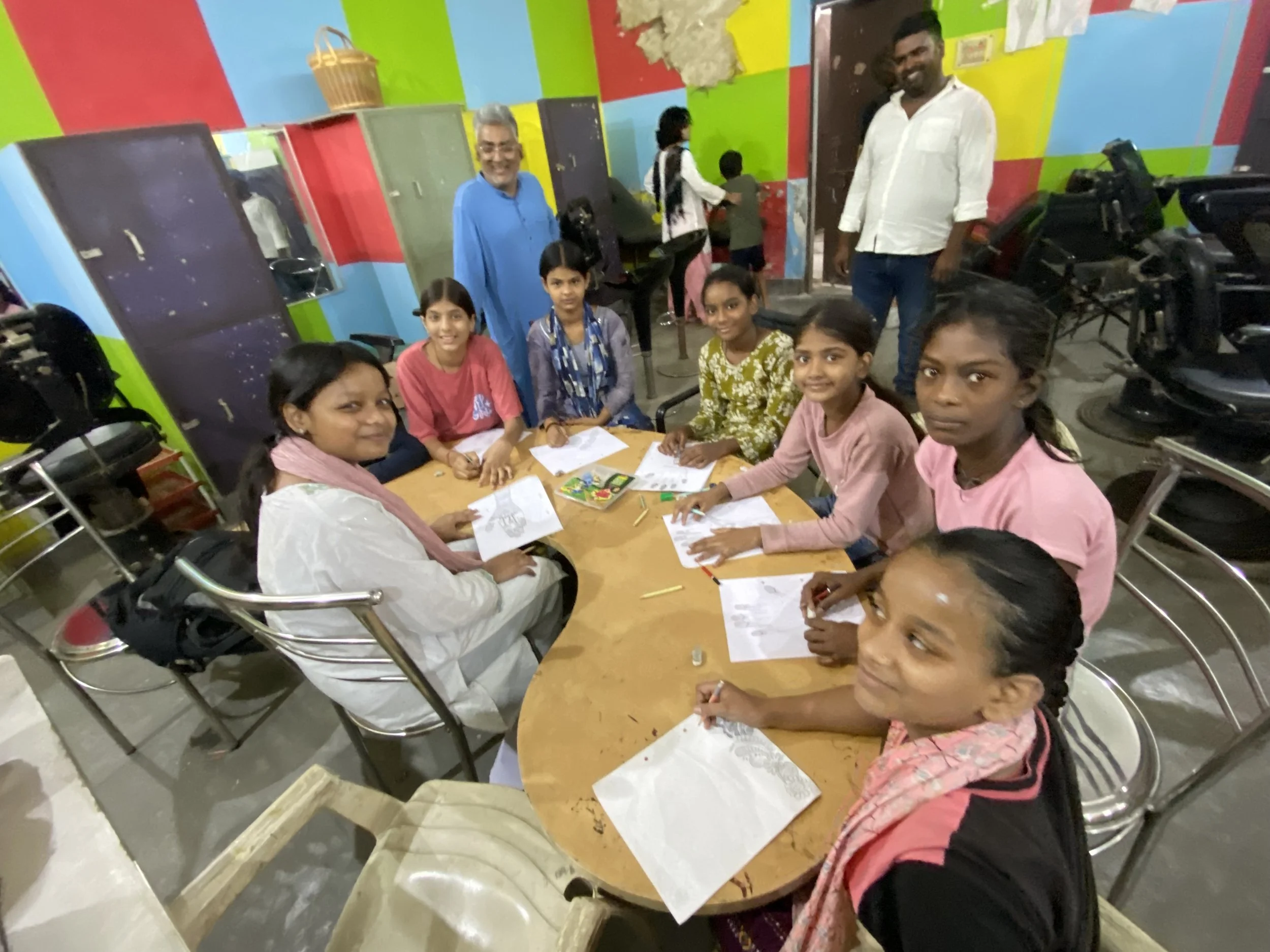
Creating henna designs on paper before they can make them on hands and feet - all part of a beautician’s training at Guria’s NFE Center.