Asha Kaithi Bal Pustakalya - A Children’s Library in Kaithi, Uttar Pradesh, India
Barakat’s acquaintance with the non-profit Asha for Education goes back many years. Having often consulted with team members of the Boston Chapter of Asha, I was delighted to take our association further on this trip by looking into their existing projects in Benaras. Benaras or Varanasi, as it is variously called, is a center for carpet-weaving in India. Barakat’s work has often - though not always - been centered around carpet-weaving areas of India, Pakistan, Nepal, and Afghanistan. To some extent, this has to do with the beginnings and continued support of Barakat through the efforts of carpet producers like Yayla Inc. & Landry and Arcari.
Benaras is also in a particularly backward part of India - eastern Uttar Pradesh (UP). Holding about 40% of UP’s more than 241 million people, the region is primarily agrarian relying mostly on seasonal rains and the natural fertility of the Indo-Gangetic plains. Low literacy rates marked by gender disparity are further exacerbated by the presence of multiple backward classes and Dalit groups. All in all, eastern UP remains one of the most densely populated parts of the world with more than 1000 people per square kilometer and is a part of the country with perhaps some of the most immense challenges in the spheres of female education and empowerment. It is also severely challenged in terms of other human development indices like health, employment, safety and lacks deplorably when it comes to the preservation and protection of natural resources. Having said this, the development projects that we visited in Benaras were a source of great joy and hope for the individuals and communities that they work with.
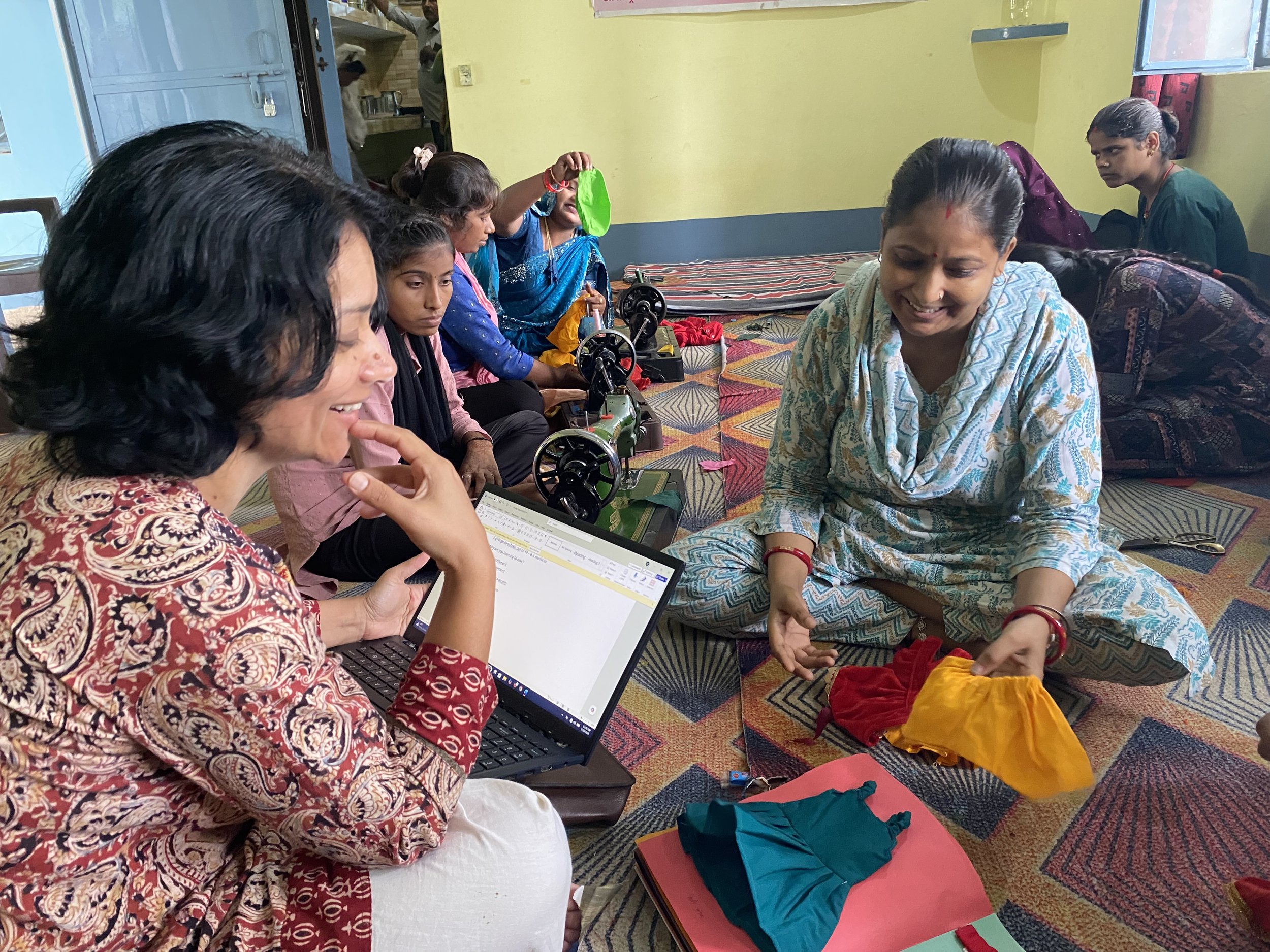
The teacher for the sewing class displays samples made by her students, all of who so look forward to their classes where they get to socialize and learn something.
Our very first visit on this trip was to Asha Kaithi Bal Pustakalay (A children’s library located in Kaithi and funded, to some extent, by the organization Asha). The name, however, gives a mere glimmer of the true extent of the work being done here. The Center houses women’s vocational education courses; a library which girls from neighboring rural areas use to prepare for competitive exams at the local, state and central level; online and in-person English language classes; student-led organic farming; a (sanitary) pad bank; a mobile library among other things.
We first visited a course for girls and women who walk or cycle from their villages, about 3-4 kms away. The course teaches the participants how to sew. When asked why they are learning, they replied that they were hoping to generate income, “at least some pocket money” for themselves, or because it was “a skill that would add something to their lives.” In other words, they were learning for enrichment and/or income-generation potential. Of the 10 girls who were present that day most had completed 12th grade, 2 had studied till 8th, and there were 2 who were doing their B.A. Some were married but most were not.
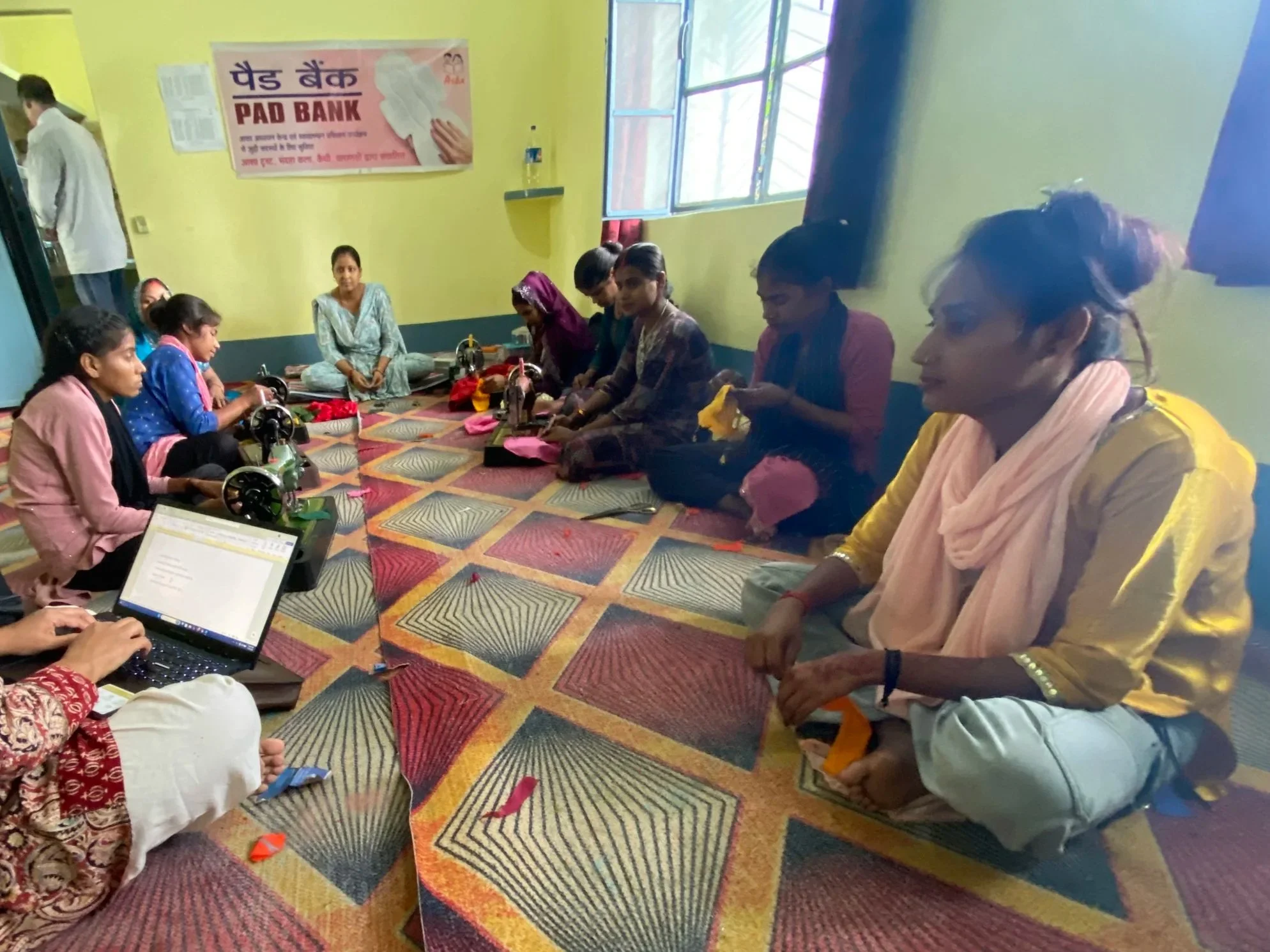
The Center also hos a pad bank which encourages girls to buy sanitary pads for a minimal cost.
At the sewing workshop that Barakat runs in Afghanistan, we intend to give the girls a sewing machine when they graduate in order to cover some of their start-up costs. Here, in Benaras, some girls already have sewing machines at home; others are planning to buy one; and yet others have decided that when they get married they will demand a sewing machine from their parents to take with them to their husband’s house. As their teacher said, “I tell them that they must ask their parents for a sewing machine when they are ready to move into their husband’s house. Instead of asking for jewellery and clothes, a sewing machine will help them be independent.”
By and large, women agreed that a good husband was not guaranteed, but in the Indian tradition marriage is not taken lightly. Therefore, another reason for learning a vocational trade was so that they may have some back up in case they were left to fend for themselves after marriage!
While I was not so surprised to see the sewing classes, I was astonished to see the beautician’s course that was in progress next door. I was amazed to hear that the services of a beautician are so very much in demand in villages. All this has changed, particularly after COVID. Here is an exchange I had with the students:
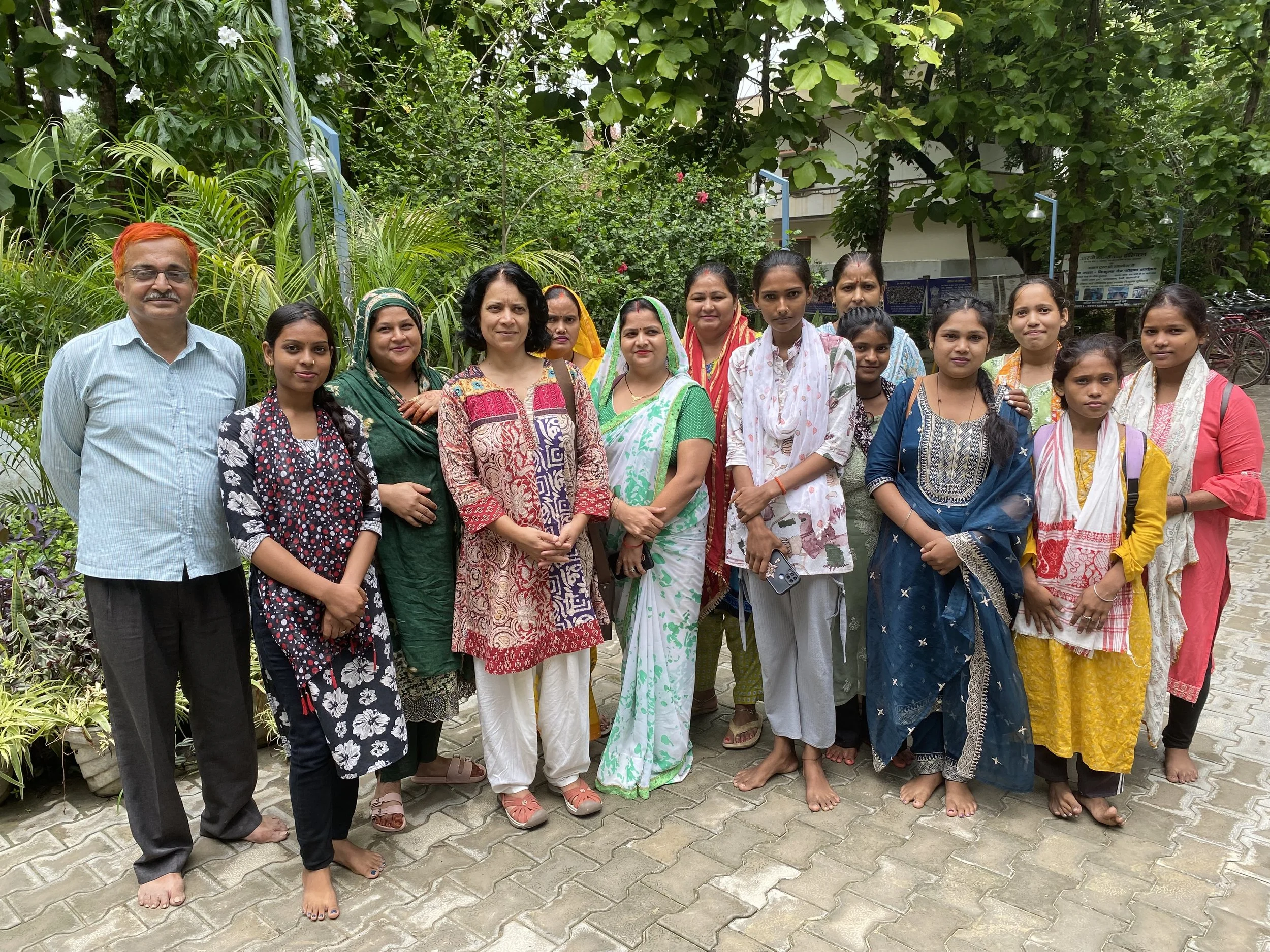
Women and girls of all ages participate in the vocational educational classes, be they sewing or beautician. They are there to learn, to earn and to feel fulfilled in what they do.
“So, do the women who go to the beauty salon in the village or for beauty services to another woman’s house in the village have their own spending money?” I asked.
“No! They don’t.” This was a very categorical statement.
“Then,” I asked, “spending on beauty treatments like eyebrows etc – this is extra. It is not a necessity.”
“Yes,” the women agreed.
“In that case, who gives the money to spend for the salon? Husband? Father?”
“Yes, the husband gives the money. Some husbands understand and just give the money on their own.”
“In that case,” I surmised, “if you have your own salon or you know the skill you can then earn a little of your own money?”
There was a great deal of agreement about this. I believe women are hungry to have some source of income, in villages as much as in urban areas. It was interesting to hear that these days having a Bachelors degree enhances the marriageable value of women. This does not necessarily mean that the woman is going to be allowed, by her in-laws, to work after marriage, but it does give them bragging points in the local community to be able to say, “My daughter-in-law has done her B.A.”
At the same time, the idea of two working parents is coming into the rural economy as well. Things are becoming costly and the desire to obtain more ‘things’ is growing as the mobile and internet brings the whole world of possibilities to everybody’s doorstep all over the world. As the teacher in the class told me: “These days girls will come and show us ‘exactly’ what they want us to do (with their hair and makeup) on the mobile.”
When considering how they may be able to start their business, the women spoke of doing apprenticeships first, and of getting loans. However, I did not get a sense that the women had any real knowledge of how to make budgets or timelines, estimate profit and loss, keep accounts, or how to access resources that would allow them to start their own business, even after the apprenticeship. This was a particular lacuna in their current education.
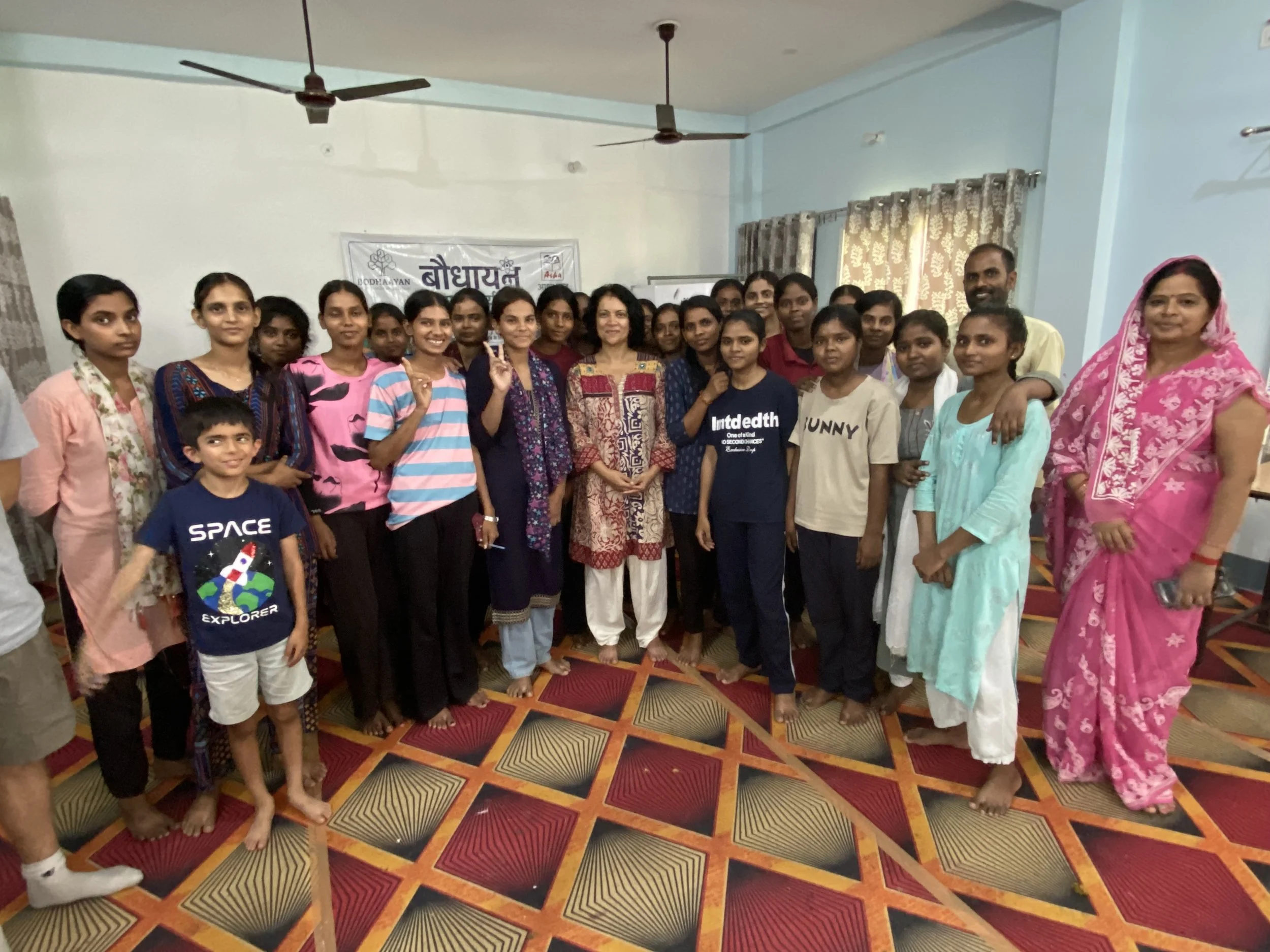
Young girls who use the library to prepare for competitive examinations. These girls are career oriented and they use the Kaithi Pustakalaya to prep and put in long hours there.
We moved to the next part of the building where the library is housed with books, in particular, for competitive examinations. Girls were preparing for a range of exams from state police to government teaching jobs to administrative positions with the government and with the railways. The library is well stocked and a home away from home for girls who come in for the whole day to sit and study, using the books and computers that are available. I was also able to see an online English class being conducted over Zoom by a volunteer from Australia.
What surprised me was the support that these girls have from their families. Unlike a decade ago, parents are with their daughters in their struggle to get employed. They are encouraged to prepare for exams and families are paying the examination fees for their daughters. Even in Eastern Uttar Pradesh, where the challenges of getting a decent education and finding employment are immense, girls are studying and competing. Asha Kaithi Bal Pustakalaya is enabling them to achieve these goals and the project building itself serves a hub for not just these ventures but others as well:
- The Pad Bank where girls can access sanitary napkins for a nominal cost
- Mobile library that can travel to provide books to children of migrant laborers who work in brick kilns
- Organic farming
- Solar energy generation
All these ventures are housed in this one project and each one of them contributes something meaningful to the life of the local community and the girls who come from near and far. Possibly, these are projects that the government should be doing. However, it is a relief that at least a few NGOs are still permitted to continue this life-changing work.
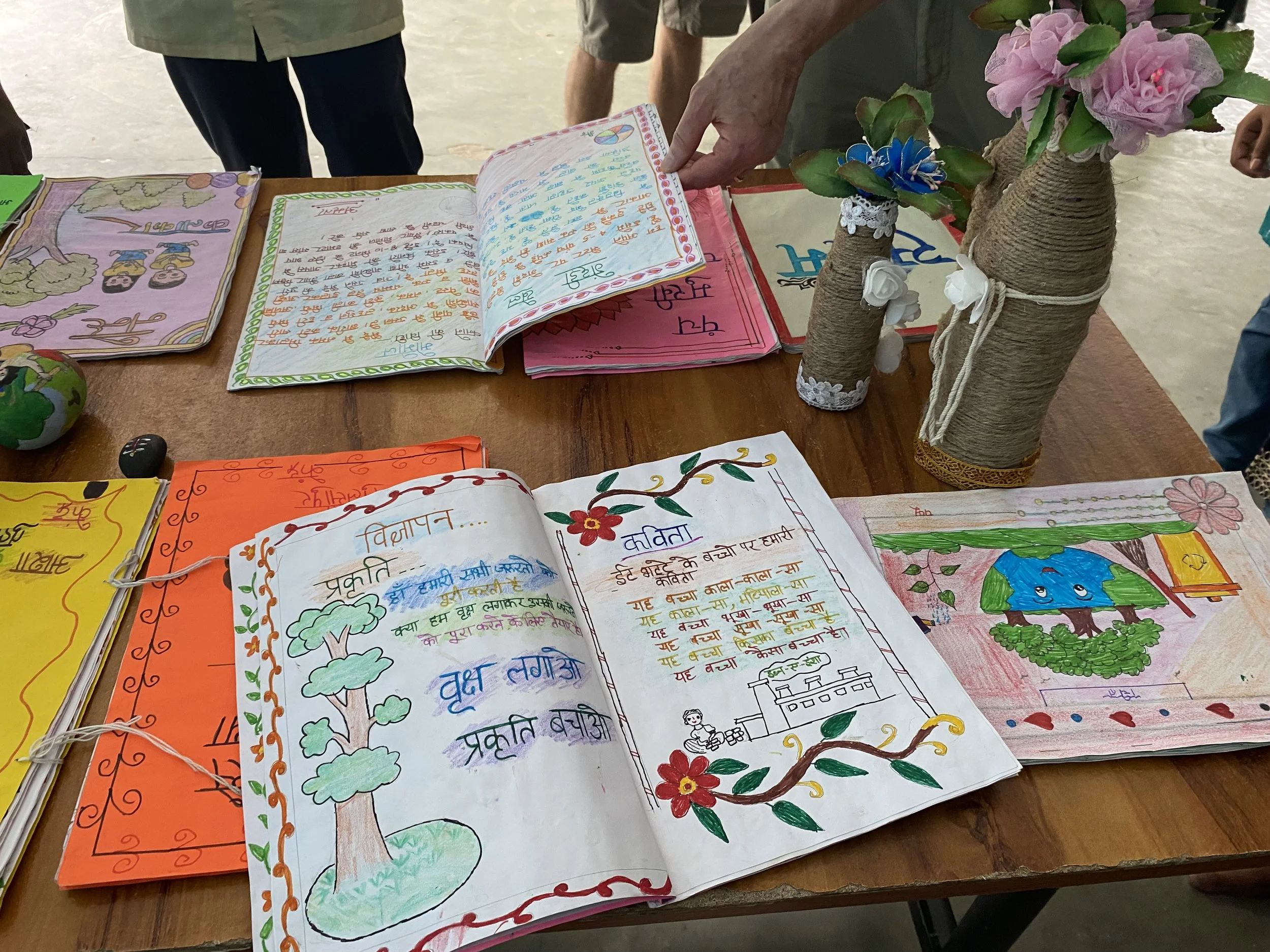
Illustrated poems, decorated rocks, and flower vases - created by girls who come to Kaithi.