ASHA Samajik Vidyalaya Rajatalab - An Educational Hub for First-Generation Learners
One of our last visits was to the multi-purpose educational and community center in Rajatalab, Uttar Pradesh. Once again, this Center serves many functions and reaches out to multiple beneficiaries: children, teenagers, young adults, and women. It holds within its four walls a library, a vocational educational center, and a K-8 school. The Center is managed by Nandlal Master who had started the work here in 1994 when his mother donated the land for a small, informal school. Over time the building for the school was constructed and continues to be expanded upon as it evolves to meet the needs of the community.
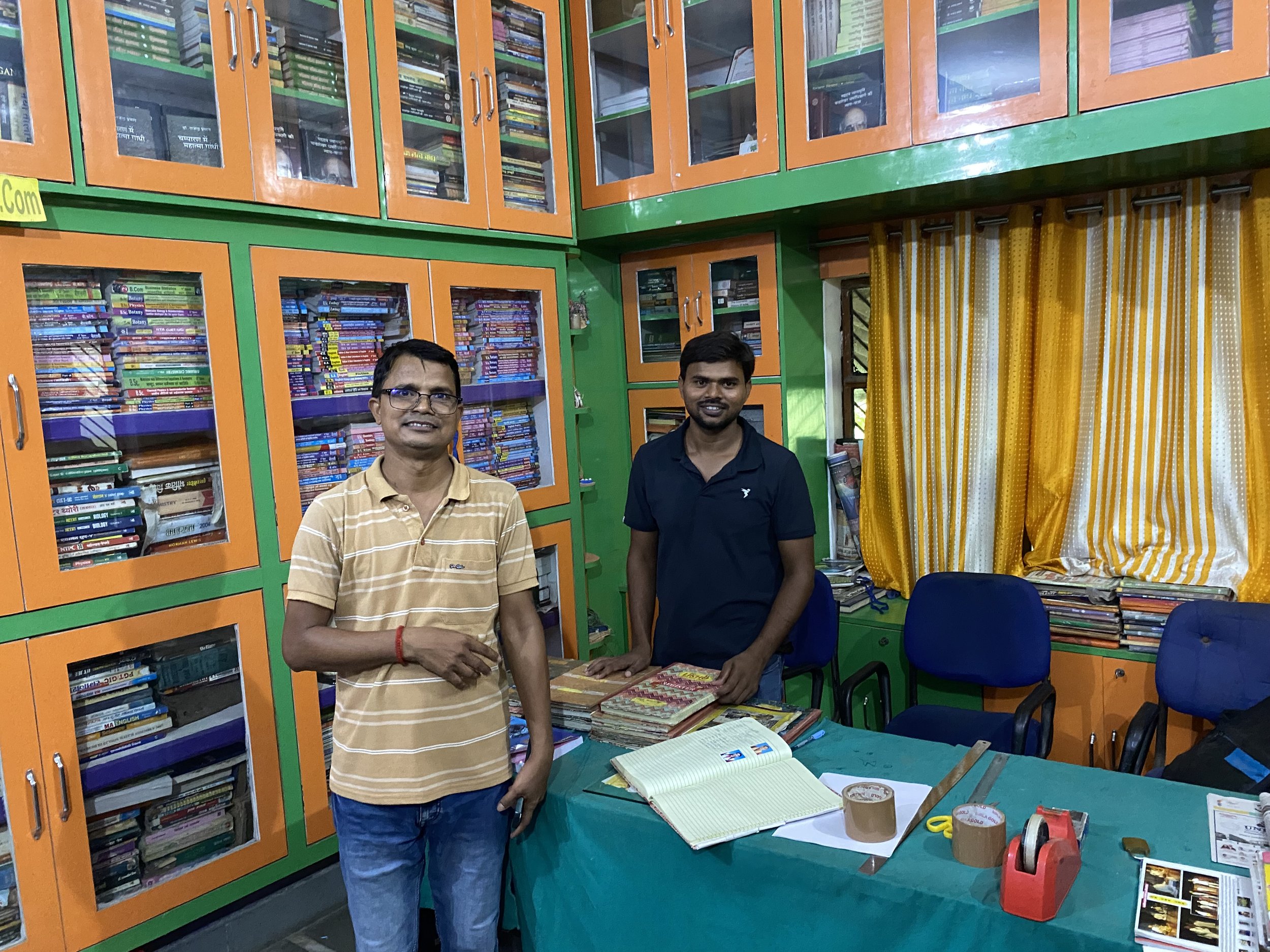
Panchmukhiji who manages the library and acts as career counselor to the girls is instrumental in the success of the programs at the Rajatalab Center.
Our visit to ASHA Samajik Vidyalaya Rajatalab (Community School, Rajatalab) began with a meeting with the women of the self-help group who live in neighboring villages. The women meet regularly and donate anywhere from 100 rupees/month to 1000 rupees/month. Each group will have anywhere from 10 to 25 members. They also participate in the Sewing Centers which remains a popular skills training activity in rural India as well as rural Afghanistan (as we are learning at Barakat). Currently, there are 17 separate sewing centers operating in the area. Each course will have from 15-30 girls in a class and they run 6 days/week. They have been growing in popularity since 2005 when they first started. The women I met knew of at least 17 girls who had opened their own small businesses in the area and in cities like Delhi and Surat.
There can be no doubt that both self-help groups which act as informal banking systems to women and sewing classes for girls are small steps towards the larger goal of female self-empowerment. These projects are appreciated by the women and forward their goal of having more independent futures.
We happened to be there on a day when 8 of the 10 girls who had been selected as scholarship recipients by Sankara Eye Hospital Foundation in Coimbatore, Tamil Nadu were being given a warm send-off. The 2 girls who could not accept the scholarship had medical issues. This is only the second year that the Center has prepared girls for the Eye Hospital examination and the number of girls chosen for the Scholarship has gone up from 3 to 10! These girls were tutored at the Center and used the library to prepare for the examination, and we were fortunate to congratulate them as they began their training to become qualified nurses. The further advantage of getting this particular Scholarship is that not only are the girls covered for their education and training, but they are also guaranteed jobs within the Sankara Eye Hospitals upon graduation.
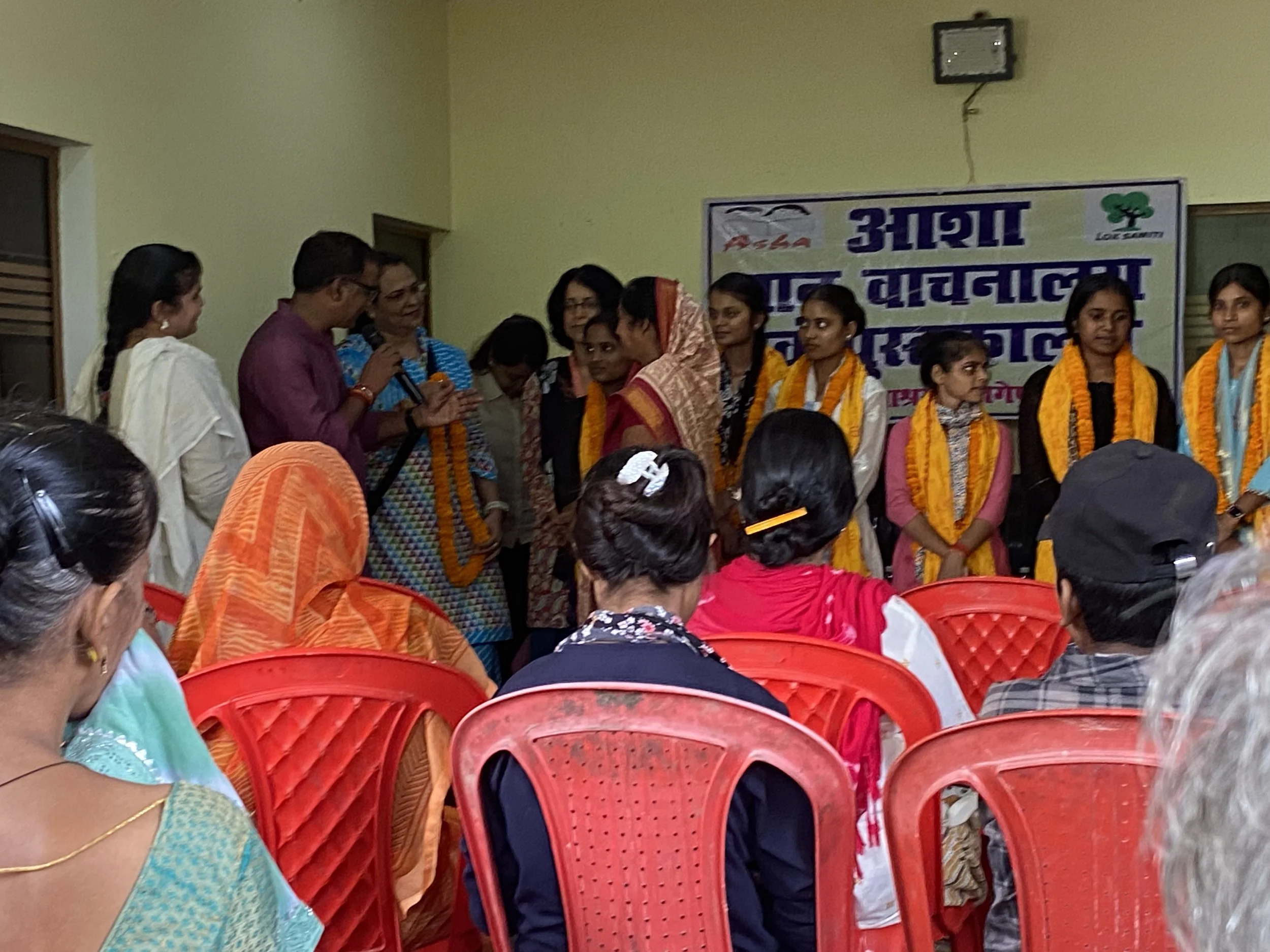
Families of the girls watched as they were felicitated for receiving the Sankara Eye Hospital Foundation Scholarship. This is big step for the girls and for their families.
Having distributed the certificates to the girls who were leaving the very next day for Coimbatore, Tamil Nadu we went towards the library that is being funded by ASHA. The library started in a small way in 2015 and grew over time. It now supports approximately 2,100 students (70% female) from 30-40 villages all of whom register to be ‘members of the library’ in order to withdraw books. There are three kinds of books available: educational/study materials for high school and college; competitive exam books to enable exam preparation; historical/religious/environmental/civic & constitutional books.
It is noteworthy that the students are mostly first-generation learners. The area in the surrounding villages comprises weavers of an age-old tradition: the weaving of Benarsi sarees. However, these very weavers who know complicated patterns of sarees are illiterate and cannot read or write.
The Center is now making a push for a digital addition to the library so that the students can also be computer literate. Currently, this is a challenge for girls who want to sit for competitive examinations that are also online. They may go for the examination and find themselves handicapped because they do not know how to use a mouse and may be working on a keyboard for the first time! This drastically affects their chances of clearing the competitive examination. ASHA Kaithi center had a fully functioning computer center which was heavily used. A similar computer center is needed at the Rajatalab Center as well. While construction has started over here, it is somewhat limited by lack of funding. As it is, the current library provides not just the books but also career counseling and exposure to opportunities through talks by well-chosen speakers.
Along with running all these projects in the space of the Rajatalab Center, there is also an entire school, serving 260 students from grades Lower KG to 8th. Another NGO offers free and fresh meals to the children here and this is much appreciated by the families who are mostly of low socioeconomic status.
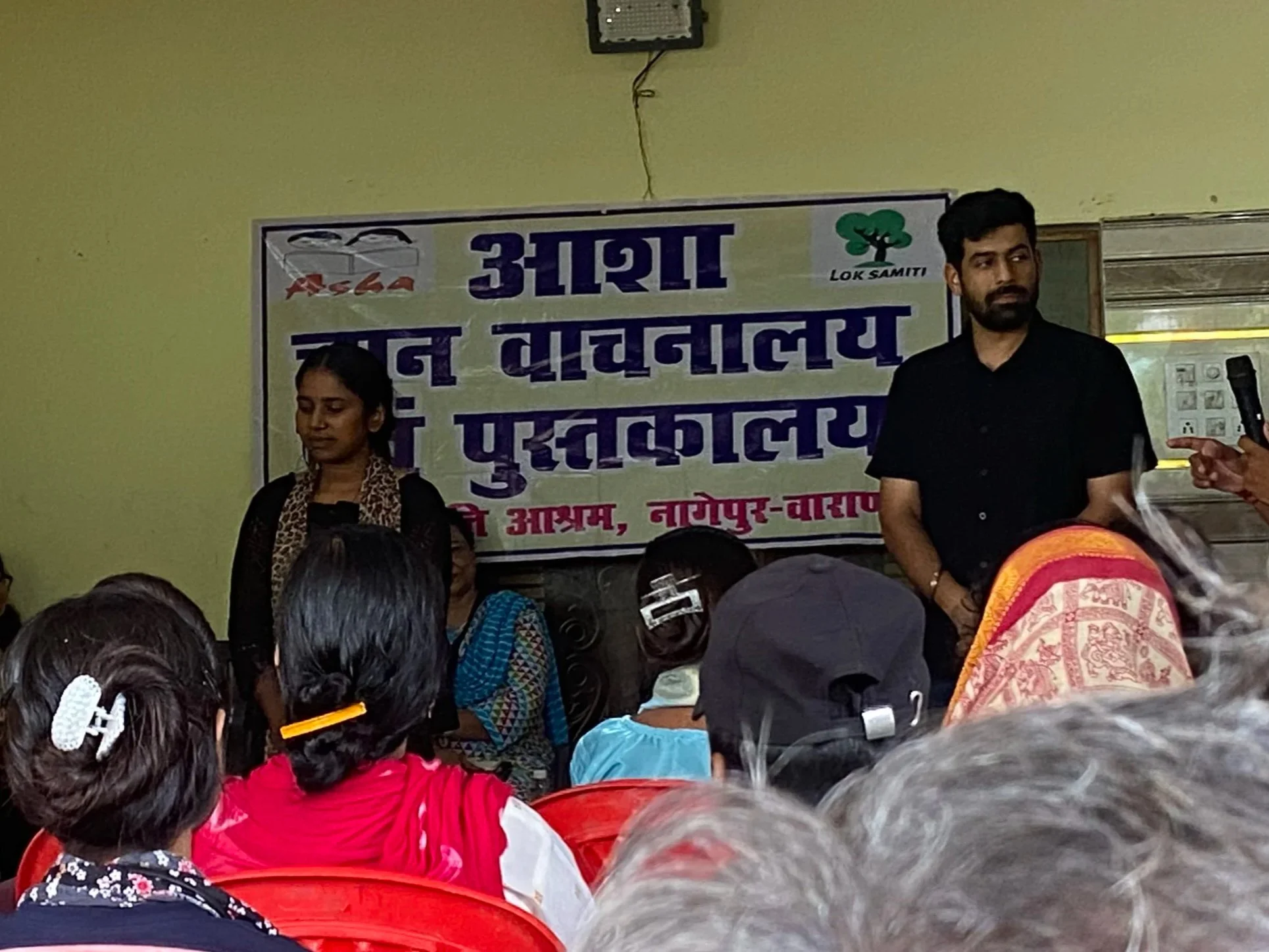
Feeding India, an NGO that provides free meals to children in schools, is responsible for providing fresh meals to the children at the school in Rajatalab. Their representative was also present on this occasion.
All of these projects are housed within the four walls of the ASHA Samajik Vidyalaya Rajatalab. Undoubtedly, this educational hub needs support in order to continue growing as it adapts to meet the needs of its beneficiaries.